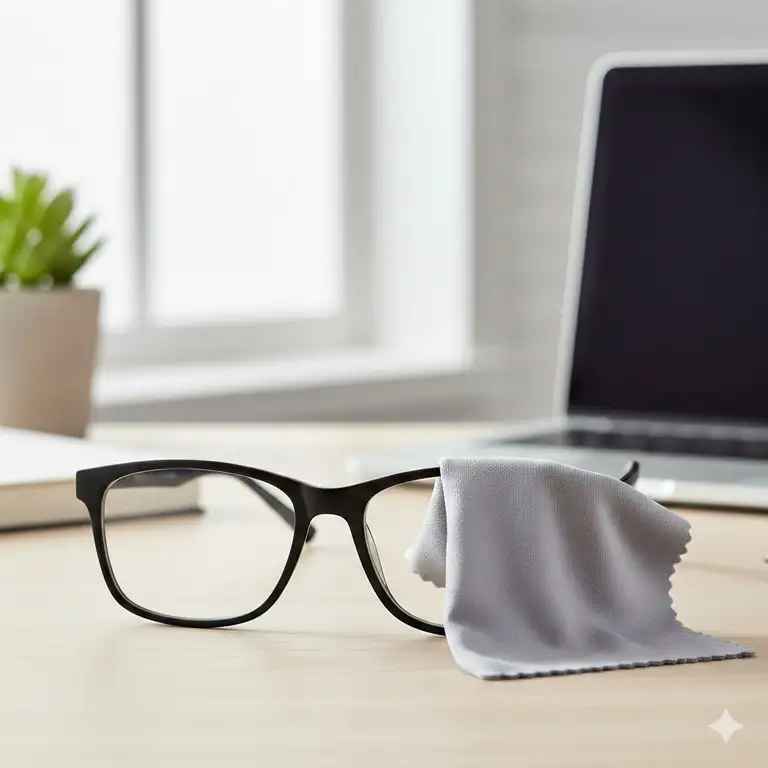
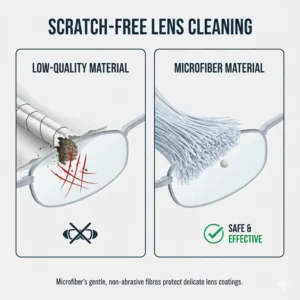
Let’s be honest. If you wear glasses, you’ve probably, at some point, committed the cardinal sin: wiping your lenses on your shirt. I know I have. But here’s the kicker—that simple, seemingly harmless act is slowly, but surely, inviting micro-scratches that degrade your vision and damage expensive lens coatings. Your glasses are a precision instrument, and the thing you use to clean them—the humble glasses cloth material—is perhaps the most critical component of your lens care regimen.
Choosing the right glasses cloth material is a decision that moves beyond mere convenience; it’s an investment in the longevity and clarity of your eyewear. It’s about understanding the science behind modern lens coatings (anti-reflective, anti-scratch, blue light filters) and selecting a material that can effectively clean without causing microscopic harm. For anyone who depends on their eyewear—whether you’re an optometrist, a professional photographer, or just someone who wants to see clearly—this level of detail is non-negotiable.
✨Was this helpful? Spread the word! 🚀
[addtoany]
This comprehensive guide, written by an expert with years of experience analyzing optical accessories, is dedicated to exploring the top materials, key specifications, and the absolute best products on the market today. We will not only look at the ubiquitous microfiber but also delve into sophisticated alternatives, helping you find the perfect glasses cleaning cloth for your specific needs.
| Material Type | Primary Composition | Cleaning Power (Oil/Smudge) | Lint Risk | Durability (Wash Cycles) | Ideal For… |
| Microfiber (Standard) | Polyester/Polyamide Blend (e.g., 80/20) | Excellent | Very Low | High | All-purpose, everyday cleaning, removing fingerprints. |
| Microfiber (Suede/Silk-like) | Ultra-fine, dense Microfiber (often 100% Poly) | Superior | Virtually None | High | Delicate coated lenses, high-end optics, screens. |
| Natural Silk | Natural Protein Fiber | Moderate (Best for light dust) | Low | Medium (Hand-wash recommended) | Luxury feel, light cleaning, eco-conscious users. |
| Cotton (Tightly Woven) | Natural Cellulose Fiber | Fair | Medium | High | Eco-friendly option, general frame cleaning, needs high-quality weave for lenses. |
🔬 The Science of glasses cloth material
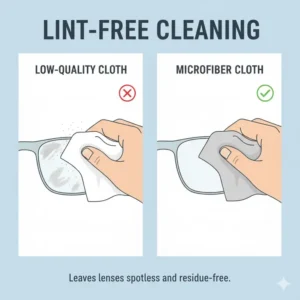
When you examine the surface of a lens, even a high-end one, under a microscope, it’s not perfectly smooth. Modern lenses feature complex, multi-layered coatings. If the material you use to clean them is not finer than the smallest particles of dust or the fiber gaps themselves are too large, you risk dragging particulate matter across the surface. This is why your old t-shirt is a terrible choice; its cotton fibers are massive compared to a fine microfiber filament and often trap abrasive particles.
Microfiber: The Dominant Player in Lens Care
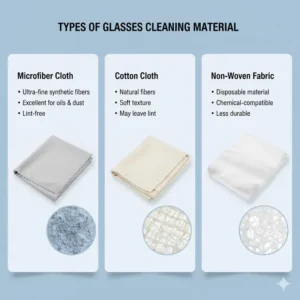
Microfiber is, without a doubt, the king of glasses cloth material. But what is microfiber, really? It’s not a single material but a classification of fibers that measure less than one denier in diameter (or about 0.3 denier in the eyeglass industry, which is less than 1/100th the diameter of a human hair).
-
Composition: Most high-quality microfiber is a blend of Polyester (provides structure, strength, and oil absorption) and Polyamide (Nylon – provides softness and high water absorption). A common ratio for top-tier lens cloths is 80% Polyester and 20% Polyamide, though 70/30 blends are also common.
-
Mechanism: The fibers are often “split” during manufacturing, creating millions of tiny hooks or wedge-shaped cross-sections (as mentioned by Eyewearglobo). This split structure is what gives microfiber its incredible cleaning power. When you wipe a surface, these ultra-fine fibers act like tiny scrapers and magnets, simultaneously lifting and trapping dust, oils, and moisture within the cloth’s structure, rather than just pushing them around.
-
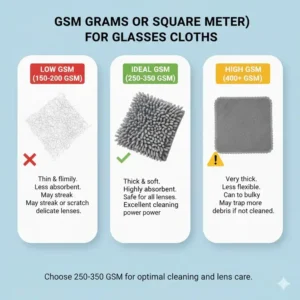
Density (GSM): A key, often overlooked, technical specification is the GSM (Grams per Square Meter). Higher GSM usually indicates a thicker, more luxurious, and more absorbent cloth, though too high a GSM (like those used for car detailing) can be too “grabby” for delicate lenses. For an excellent glasses cleaning cloth, a GSM between 200 and 350 is generally considered optimal.
Secondary Materials: Fine-Tuning Your glasses cleaning cloth
While microfiber dominates, other materials offer niche advantages:
-
Sueded Microfiber: Often referred to as “microfiber silk” because of its incredibly smooth, almost slick texture. This material is made of ultra-fine, tightly woven 100% polyester (like “Sea Island Silk” in the industry). It is arguably the best for preventing scratches on highly sensitive coatings because its non-napped, uniform surface has virtually no tendency to harbor large abrasive particles. It’s the professional’s choice for camera lenses and AR/VR headsets.
-
Natural Chamois: Historically used, but less common today for eyeglasses. While incredibly soft and absorbent, chamois (often made from sheep or goat skin) is best used for wet cleaning. For dry wiping, it lacks the particulate-trapping mechanism of modern microfiber, and if not kept meticulously clean, it can harbor bacteria.
-
Bamboo Fiber: An environmentally friendly alternative. Bamboo is naturally hypoallergenic and has mild antimicrobial properties. However, for eyeglasses, it is less effective at oil and smudge removal than split microfiber. It’s an excellent option for a sustainable frame cloth but usually not the top choice for the lens itself.
Key glasses cloth material Feature Matrix
| Feature/Metric | Standard Microfiber (80/20) | Sueded Microfiber (100% Poly) | Natural Silk Cloth | Why It Matters for Glasses Lens Cleaning |
| Fiber Diameter (Denier) | $0.3 – 0.5$ denier | $<0.1$ denier (Ultra-fine) | $\approx 1.2$ denier (Natural) | Finer fibers remove smaller debris; critical for coated lenses. |
| Oil/Smudge Removal | Excellent | Superior | Fair | High polyester content is essential for breaking down and absorbing skin oils. |
| Lint-Free Property | Very Good | Outstanding | Good | Absolutely essential for anti-reflective (AR) coatings, which tend to show every stray fiber. |
| Washability/Durability | High (Machine Washable) | High (Machine Washable) | Medium (Hand Wash Only) | Must withstand regular washing to release trapped oils and dust particles. |
| Feel/Texture | Soft, Slightly ‘Grabby’ | Ultra-smooth, ‘Silky’ | Luxurious, Natural | Texture affects particle pickup; ‘grabby’ traps more, ‘silky’ minimizes surface friction. |

🏆 Top 7 Glasses Cloth Material Products: Expert Analysis
To provide an expert recommendation on the best glasses cloth material, I’ve scoured the market to identify top-selling, highly-rated products, considering their technical specifications and real-world performance as reported in customer reviews. Here is a detailed look at the 7 products that truly stand out in the categories of budget, premium, and professional use.
1. MagicFiber Microfiber Cleaning Cloths (Model: MF8566)
The quintessential budget and high-value lens cleaning cloths choice. MagicFiber offers a blend of performance and incredible volume, making it the top seller for general consumers.
-
Detailed Technical Specifications: Standard Microfiber blend (typically 80% Polyester, 20% Polyamide). Size: $6 \times 7$ inches or $5.9 \times 7.9$ inches. Edge: Sawtooth or straight-cut edge. GSM: Est. 200-220 GSM (mid-density).
-
Customer Review Analysis: Users frequently praise the MagicFiber for being “surprisingly effective for the price” and “perfect for removing fingerprints from screens and glasses.” The main complaint is the lack of a finished edge, which some note can fray over time. The 6-pack or larger bulk options are often cited as a huge value.
-
Professional Applications: Ideal for large office environments, school labs, or as a giveaway item where high volume and moderate quality are required.
-
Pros/Cons Analysis:
-
✅ Pros: Excellent value per cloth, very good all-around cleaning power, high microfiber blend ratio for oil absorption.
-
❌ Cons: Sawtooth edge can fray, not as premium or ultra-smooth as sueded alternatives.
-
2. Koala Kloth Microfiber Cleaning Cloth (Model: KKC-L-PK2)
Often bundled with their popular Koala lens cleaner solution, the Koala Kloth is a mid-range, premium microfiber option that focuses on a more robust, luxurious feel.
-
Detailed Technical Specifications: Ultra-premium Japanese-grade Microfiber. Blend: Proprietary blend (often reported as 75/25 or 80/20). Size: $8 \times 8$ inches (larger than standard). Edge: Finished, stitched edge. GSM: Higher density, estimated at 300+ GSM.
-
Customer Review Analysis: Customers consistently highlight the thickness and softness of the Koala Kloth, saying, “It feels like a little towel, not flimsy at all.” Reviewers confirm superior streak-free cleaning, especially when paired with the Koala spray, emphasizing its high-quality feel over a standard, thin cloth.
-
Professional Applications: High-end optical shops, professional camera/video gear cleaning, and meticulous consumer electronics users.
-
Pros/Cons Analysis:
-
✅ Pros: High GSM provides a plush feel and excellent absorbency, larger size is ideal for sunglasses or tablets, durable stitched edge.
-
❌ Cons: Higher price point than bulk options, can be a little too thick for some tight glasses cases.
-
3. Zeiss Microfiber Lens Cloth (Model: 885141)
When talking about lens care, the name Zeiss carries significant weight. The Zeiss Microfiber Lens Cloth is the gold standard of professional-grade quality, often included with high-end camera lenses and premium eyeglass purchases.
-
Detailed Technical Specifications: High-performance, anti-static Microfiber textile. Blend: Specific composition proprietary to Zeiss, optimized for their lens coatings. Size: Varies, often $6 \times 7$ inches. Edge: Laser or heat-cut edge to minimize lint.
-
Customer Review Analysis: The feedback often centers on its reliability and consistency: “This is the only cloth that doesn’t leave lint on my expensive AR-coated lenses.” The brand trust is a massive factor, with users relying on it for their most delicate optics, including camera lenses and microscopes.
-
Professional Applications: Optometry clinics, camera repair/cleaning services, and any user with specialty or high-prescription lenses that require exceptional care.
-
Pros/Cons Analysis:
-
✅ Pros: Unmatched brand trust and expertise in optics, exceptional lint-free performance, proven safe for all high-tech lens coatings.
-
❌ Cons: Small size, typically only sold in single or two-packs, making it less economical for bulk needs.
-
4. Care Touch Microfiber Cleaning Cloths (Model: CT-MCF-100)
The Care Touch Microfiber Cleaning Cloths are another excellent, high-volume alternative, specializing in providing maximum utility for cleaning glasses, screens, and cameras.
-
Detailed Technical Specifications: Standard Microfiber blend (typically 80/20 Polyester/Polyamide). Size: $6 \times 7$ inches. Edge: Sawtooth cut. Bulk Packaging: Often sold in packs of 100 or more.
-
Customer Review Analysis: The sheer quantity is the overwhelming positive, making it a favorite for families and businesses. Reviews mention: “I finally have a clean cloth for every pair of glasses and every device in the house.” Its main drawback is a slightly thinner feel than premium options, but the effectiveness on basic smudges and dust is praised.
-
Professional Applications: Excellent choice for corporate offices, distribution centers, and households with numerous pairs of glasses or electronic devices.
-
Pros/Cons Analysis:
-
✅ Pros: Unbeatable quantity for the price, decent cleaning power for everyday use, great for general surface dusting.
-
❌ Cons: Thinner fabric (lower GSM), may need replacement more often than thicker cloths.
-
5. Nerdwax Secretly Nerdy Cloth (Model: SNC-001)
A lesser-known, premium brand that focuses on using sustainable materials and exceptional quality microfiber. The Nerdwax Secretly Nerdy Cloth stands out for its high-GSM, plush feel and recycled material composition.
-
Detailed Technical Specifications: 100% Post Consumer Recycled Microfiber (Polyester/Polyamide blend). Size: $6 \times 7$ inches. Edge: Premium finished edge. GSM: Very high, giving it a thick, soft feel.
-
Customer Review Analysis: Users love the “eco-friendly” aspect and the surprising thickness of the material, often saying it’s superior to the thin cloths from their optometrist. One reviewer noted, “It’s like the difference between Reese’s peanut butter cups and knock off chocolate from the dollar store.” Its higher price is offset by the quality and ethical sourcing.
-
Professional Applications: Boutiques, eco-conscious brands, and users prioritizing sustainability without sacrificing cleaning performance.
-
Pros/Cons Analysis:
-
✅ Pros: Made from 100% recycled materials (a huge plus for the environmentally conscious glasses cleaning cloth consumer), superior thickness and durability.
-
❌ Cons: High-premium price point, smaller size.
-
6. Microfiber Wholesale Suede Lens & Glass Cleaning Cloth (Model: Suede-8×8-10)
This product represents the sueded microfiber category—a truly exceptional material often overlooked by general consumers. This type of glasses cloth material is specifically engineered for streak-free polishing.
-
Detailed Technical Specifications: Microfiber Suede material (often 100% Polyester for ultra-smoothness). Size: $8 \times 8$ inches (large). Edge: Non-serrated, straight-cut or rounded. Texture: Extremely smooth, “silky” feel with no noticeable nap.
-
Customer Review Analysis: Customers specifically looking for high-end optical cleaning praise this type. The key comment is that it’s “the best for removing stubborn oil and leaving zero streaks, especially on camera lenses and VR headsets.” It’s a favorite among serious photographers. The silky texture is less ‘grabby’ than standard microfiber but excels at polishing.
-
Professional Applications: Photography, aerospace, VR/AR equipment maintenance, and cleaning of delicate specialty instruments.
-
Pros/Cons Analysis:
-
✅ Pros: Ideal for the most sensitive coatings, excellent polishing action, very durable and lint-free.
-
❌ Cons: Less ‘grabby’ feel means it may not pick up large, dry dust particles as well as standard microfiber; requires pre-dusting.
-
7. Shacke Microfiber Cleaning Cloths (Model: SH-6X7-50)
The Shacke Microfiber Cleaning Cloths are positioned as a robust, slightly thicker alternative to the budget bulk options, offering a good middle ground for quality and cost for an everyday glasses cleaning cloth.
-
Detailed Technical Specifications: Microfiber blend (typically 80/20 Polyester/Polyamide). Size: $6 \times 7$ inches. Edge: Laser or heat-cut edge for a cleaner finish than serrated edges. Bulk Packaging: Typically sold in packs of 50.
-
Customer Review Analysis: Reviewers highlight the “upgrade” feel over the cheapest cloths. Many state that the Shacke cloths are “thicker and last longer” than comparable budget options. The heat-cut edge is often mentioned as a key benefit, as it resists fraying much better than the basic sawtooth cuts.
-
Professional Applications: Retail environments, corporate gifts, or for users seeking a substantial supply of high-mid quality cloths without the premium price tag.
-
Pros/Cons Analysis:
-
✅ Pros: Good balance of quality and quantity, heat-cut edge enhances longevity, effective on heavy smudges.
-
❌ Cons: Slightly smaller size than some competitors, not as plush as the Koala Kloth.
-
💬 Just one click – help others make better buying decisions too!😊
[addtoany]
📊 Technical Specifications Matrix: Comparing the Best lens cleaning cloths
Comparing the raw specifications of a glasses cloth material is crucial for an informed choice. It moves the decision from subjective feel to objective data. Here we examine the core technical differentiators.
| Product Name (Model) | Blend Ratio (Poly/Polyamide) | Size (Inches) | Edge Type | Estimated GSM | Cleaning Focus |
| MagicFiber Microfiber Cleaning Cloths (MF8566) | $80/20$ | $6 \times 7$ | Sawtooth Cut | $200-220$ | General Fingerprint/Dust Removal |
| Koala Kloth Microfiber Cleaning Cloth (KKC-L-PK2) | $\approx 75/25$ (Proprietary) | $8 \times 8$ | Stitched/Finished | $300+$ | Luxurious Feel/High Absorbency |
| Zeiss Microfiber Lens Cloth (885141) | Proprietary | $6 \times 7$ | Laser/Heat-Cut | $\approx 250$ | Professional, Anti-Static, Lint-Free |
| Care Touch Microfiber Cleaning Cloths (CT-MCF-100) | $80/20$ | $6 \times 7$ | Sawtooth Cut | $180-200$ | Bulk/Value Cleaning |
| Nerdwax Secretly Nerdy Cloth (SNC-001) | Recycled Blend | $6 \times 7$ | Premium Stitched | $300+$ | Eco-Friendly/Premium Feel |
| Microfiber Wholesale Suede Lens & Glass Cleaning Cloth (Suede-8×8-10) | $100\%$ Polyester (Suede) | $8 \times 8$ | Straight-Cut | $220-250$ | Polishing/Streak-Free Optics |
| Shacke Microfiber Cleaning Cloths (SH-6X7-50) | $80/20$ | $6 \times 7$ | Heat-Cut | $240-260$ | Mid-Range Quality/Bulk |
💰 Budget vs. Premium: A Cost-Benefit Analysis
When selecting a glasses cloth material, the price difference can be significant, but is the performance gap equally large? Not always, but the benefits of premium materials are often hidden in longevity and reduced risk of lens damage.
Budget vs. Premium Comparison Table
| Metric | Budget Bulk Microfiber (e.g., Care Touch) | Premium Microfiber (e.g., Koala Kloth, Zeiss) |
| Cost per Cloth (Est.) | $<\$0.50$ | $>\$2.00$ |
| Primary Compromise | Lower GSM (thinner), basic sawtooth edges, higher chance of lint/fraying. | None in quality, only in initial cost and lower bulk quantity. |
| Wash Durability | $20-30$ cycles before noticeable degradation. | $50+$ cycles, often maintaining integrity for years. |
| Safety for AR Coatings | Safe, but requires meticulous pre-cleaning (rinsing) to ensure no trapped debris. | Extremely Safe; the finer, denser weave is less likely to hold abrasive particles. |
| User Experience | Practical, disposable, or for general screen cleaning. | Luxurious, professional feel; dedicated to high-value optics. |
A common misconception is that all microfiber is the same. However, the quality of the raw fiber, the tightness of the weave, and the finishing process (like a heat-cut versus a serrated edge) drastically impact the cloth’s performance and lifespan. For a pair of $500 prescription glasses, the small extra cost for a premium glasses cleaning cloth is negligible compared to the cost of replacing scratched lenses. Click here to check the current pricing and discounts on these premium cloths. ✨
🔑 Key Features and Benefits Comparison
The core function of a glasses cloth material is to clean, but how do different materials deliver on key features like anti-fog or anti-static properties?
Key Features/Benefits Comparison Table
| Feature/Benefit | Microfiber (General) | Suede Microfiber (Polishing) | Treated Anti-Fog Microfiber (Specialty) | Traditional Cotton/Flannel |
| Oil/Fingerprint Removal | High | Very High | Medium | Low |
| Lint-Free Finish | High | Excellent | Good | Poor (often leaves fibers) |
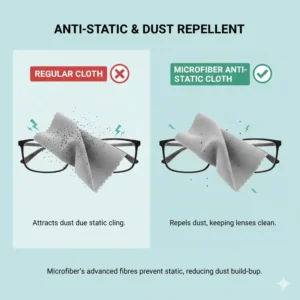
| Anti-Static Properties | Moderate (often factory-treated) | High | Moderate | Low/None |
| Scratch Prevention | Very High (When clean) | Exceptional | Very High (When clean) | Low (Large fiber size traps debris) |
| Fog Reduction | None (unless factory-treated) | None | Excellent (Chemical coating prevents condensation) | None |
| Primary Mechanism | Mechanical particle trapping and splitting action. | Gentle friction and ultra-fine fiber smoothing. | Chemical transfer from cloth to lens surface. | Basic wiping/absorption. |
The key takeaway here is the emergence of Treated Microfiber. These specialized options aren’t just a different glasses cloth material; they are microfiber infused with anti-fog chemicals, such as surfactants. When you wipe your lens, a thin, transparent layer of this chemical is transferred, which dramatically reduces surface tension and prevents water vapor from condensing as fog. This feature is a game-changer for anyone wearing glasses with face masks or engaging in strenuous outdoor activities.
🛍️ The Detailed Buying Guide: Choosing Your Perfect glasses cloth material
Selecting the right glasses cloth material requires you to analyze your specific use case, lens type, and cleaning frequency. An expert approach involves a step-by-step evaluation.
Step 1: Evaluate Your Lens and Coating Type
The first rule of lens care is: protect the coating.
-
Anti-Reflective (AR) Coatings: These are highly susceptible to scratches and smudging. You need the finest, most lint-free material possible. Sueded microfiber (like the Microfiber Wholesale Suede Lens & Glass Cleaning Cloth) or the premium quality of Zeiss Microfiber Lens Cloth are non-negotiable here. A lower-quality, jagged-edged glasses cleaning cloth could fray and leave fibers or even micro-scratches.
-
Polycarbonate or Trivex Lenses: These are highly impact-resistant but softer than glass or high-index plastic. They scratch more easily. Therefore, the cleaning material must be kept pristine. Dedicate a specific, high-quality lens cleaning cloth (like the Koala Kloth) to this material and wash it regularly.
-
Blue Light/Photochromic Coatings: These coatings do not alter the cleaning requirements but reinforce the need for a non-abrasive, high-quality cloth to ensure the coating’s integrity is maintained for its full functional life.
Step 2: Determine Your Cleaning Environment and Frequency
Where and how often you clean your glasses dictates the necessary cloth features.
| Use Case | Recommended glasses cloth material | Why? |
| Office/Home Desk (Low Contamination) | Standard Microfiber (e.g., MagicFiber) | Cost-effective and excellent for routine dust and fingerprint removal. |
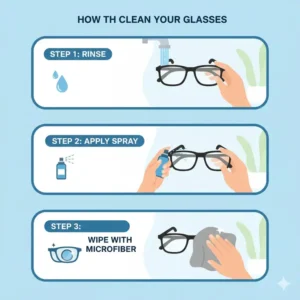
| Outdoor/Workshop (High Dust/Grime) | Zeiss or Koala Kloth (Paired with a cleaner spray) | Higher density traps more gunk; need superior quality to prevent grit from scratching lenses. Crucially: Always rinse lenses first. |
| Photography/Optics Professional | Sueded Microfiber (e.g., Microfiber Wholesale) | The absolute best for streak-free, pristine surfaces on delicate camera and telescope lenses. |
| Travel/On-the-Go | Bulk Microfiber (e.g., Care Touch – disposable) | Easily replaceable and lightweight. You’re more likely to use a fresh one if you have plenty. |
Step 3: Don’t Forget the Eco-Conscious Choice
If sustainability is a priority for your purchasing decisions, the material matters. The Nerdwax Secretly Nerdy Cloth made from recycled materials provides an excellent blend of top-tier performance and environmental responsibility. While natural fibers like cotton are biodegradable, they generally fail to meet the performance standards required for modern, coated eyeglass lenses. The long life of a durable, high-GSM microfiber cloth means you replace it less often, which is an environmentally sound choice in its own right.
🔄 Washing and Maintenance: Prolonging Your glasses cloth material Life
Even the best glasses cleaning cloth can become an abrasive tool if it’s dirty. A cloth saturated with trapped oils, skin cells, and microscopic grit will simply smear and scratch your lenses. Therefore, washing is non-negotiable.
Expert Maintenance Tips
-
Wash Frequently: A cloth used daily should be washed at least once a week. The frequency should increase if you live in a dusty environment.
-
Use Mild Detergent: Always use a mild, liquid laundry detergent. Crucially, avoid fabric softeners and bleach. Fabric softeners contain chemicals that will clog the microscopic fibers, rendering the cloth useless for absorbing oil and trapping particles. This is a common mistake that ruins a perfectly good glasses cloth material.
-
Warm Water is Best: Machine wash in warm water on a delicate cycle, or simply hand-wash with warm water and a drop of detergent.
-
Air Dry: Tumble drying can damage the synthetic fibers over time. Always air dry your lens cleaning cloths to preserve their integrity and cleaning efficacy.
-
Storage: Once clean, always store your glasses cloth material in a clean, dust-free environment—the plastic sleeve it came in or a dedicated pocket in your glasses case. A cloth left exposed on a nightstand is a magnet for dust and debris.
🛒 Upgrade Your Vision Today!
✨ Don’t miss these exclusive deals! 🔍 Take your eyecare routine to the next level with these carefully selected products. Click on any highlighted item to check current pricing and availability. These cloths and accessories will help you maintain perfect clarity!
Conclusion: The Clarity of an Informed Choice
The selection of your glasses cloth material is far more impactful than most people realize. It is the frontline defense against the inevitable smudges, dust, and oils that compromise your vision and slowly erode the integrity of modern, multi-coated lenses. As we have seen, not all microfiber is created equal. The best performing material is a high-quality, high-density, ideally $80\%$ polyester / $20\%$ polyamide microfiber, often in a ‘sueded’ or ‘silk-like’ weave, which ensures the absolute best blend of cleaning power and surface protection.
By choosing a premium, dedicated lens cleaning cloth like the Zeiss Microfiber Lens Cloth for professional use, or a high-value, bulk option like the MagicFiber Microfiber Cleaning Cloths for everyday home use, you are actively preserving your lenses. Stop using your shirt, stop using paper towels, and invest in the right tool for the job. Your crystal-clear vision is worth the small upgrade.
📝 FAQs
This section addresses frequently asked questions to ensure a complete understanding of your lens care options.
❓ Is microfiber the only good glasses cloth material for coated lenses?
❓ What blend ratio should I look for in a glasses cleaning cloth?
❓ Can I use a microfiber cloth from my auto-detailing kit on my eyeglasses?
❓ How do I remove a stubborn oil smudge from my lens if the cloth isn't working?
❓ Should I choose a stitched or a heat-cut edge for my glasses cleaning cloth?
Recommended for You
- Lens Cleaner Cloth: 7 Best Picks for Crystal-Clear Vision in 2025
- Large Microfiber Cloth for Glasses: The 7 Best Massive Wipes Revealed!
- Microfiber Camera Lens Cleaning Cloth: Best Options for Spotless, Scratch-Free Lenses [2025]
Disclaimer: This article contains affiliate links. If you purchase products through these links, we may earn a small commission at no additional cost to you.
✨ Found this helpful? Share it with your friends! 💬🤗
[addtoany]
