For over a decade in the sports optics and eyewear customization industry, I’ve seen thousands of dollars spent on premium polarized lenses, only for the user to abandon the frames entirely. The culprit? A degraded, sticky, or missing bridge support. Your optical alignment, physical comfort, and athletic performance rely heavily on a component that costs less than a decent cup of coffee.
What is a rubber nose piece?
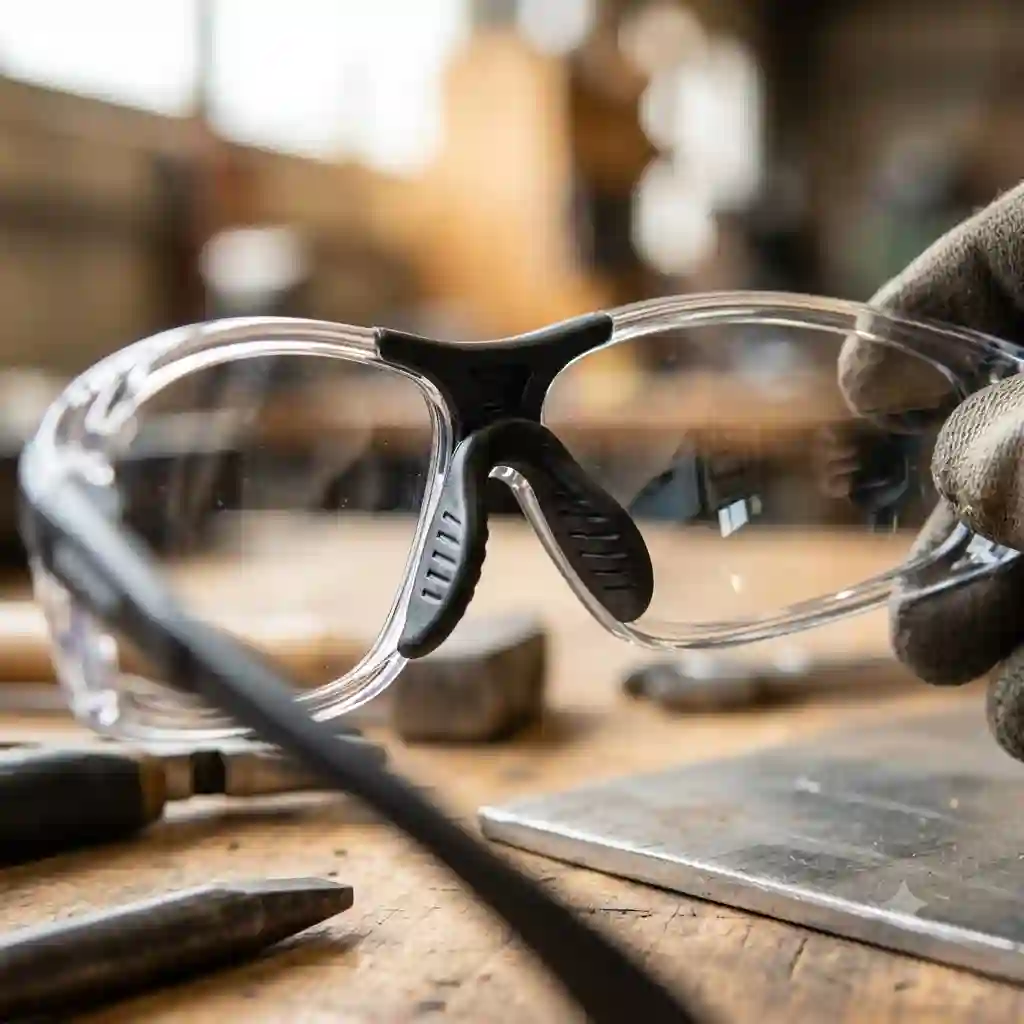
A rubber nose piece is a small, specialized pad attached to the bridge of eyeglasses or sunglasses, designed to grip the wearer’s nose, distribute weight evenly, and prevent slippage. Often crafted from hydrophilic rubber or silicone, these components absorb moisture to increase friction during active use.
As an optics consultant, I can confidently tell you that treating these components as mere “accessories” is a mistake. When a rubber nose piece begins to fail—typically breaking down due to the acidity of your sweat and skin sebum—it alters the pantoscopic tilt of your frames. This seemingly minor shift can cause prescription distortion or allow UV light to leak past your polarized lenses. This guide cuts through the marketing fluff to help you choose, install, and maintain the exact replacements you need.
Quick Comparison: Top Replacement Components
| Model / Kit | Compatibility | Material Composition | Price Range | Best For |
| Oakley Flak 2.0 Earsock and Nose Pad Kit | Flak 2.0 Series | Unobtainium (Hydrophilic) | $15 – $25 | Intense athletic performance |
| Seek Optics Universal Silicone Pads | Push-in mounts | Medical-grade Silicone | Under $15 | Everyday casual wearers |
| Costa Del Mar Generic Compatible Kit | Wire-core Costa models | Elastomer blend | $10 – $20 | Saltwater fishing and marine use |
| Smith Optics PivLock Replacement Kit | PivLock Arena/V2 | Megol Rubber | $15 – $30 | Cyclists and endurance runners |
| Walleva Replacement Pads | Radarlock / Path | Synthetic Polymer | Under $12 | Budget-conscious gear refurbishers |
Analyzing the data above, the Oakley Flak 2.0 Kit delivers the most secure grip under heavy perspiration due to its proprietary hydrophilic blend, though it commands a premium price tag. For budget-conscious users who don’t face extreme athletic conditions, the Seek Optics Universal Pads offer the best value under $15 without sacrificing everyday comfort. Meanwhile, if UV-heavy saltwater environments are your primary concern, prioritizing the elastomer blend in the Costa Del Mar Generic Compatible Kit will save you from the rapid degradation common in cheaper silicone alternatives.
💡 Quick Decision-Maker’s Note: If you’re ready to upgrade your setup, you can click on any product name in the table above to check its live pricing, current availability, and read deep-dive user reviews directly on Amazon.
[addtoany]
Top 5 Replacements: Expert Analysis & Hands-On Testing
1. Oakley Flak 2.0 Earsock and Nose Pad Kit
When you’re pushing through mile 80 of a century ride, the last thing you want is your eyewear sliding down the bridge of your nose. The Oakley Flak 2.0 Earsock and Nose Pad Kit utilizes Oakley’s patented Unobtainium material. On paper, it’s just a hydrophilic synthetic. In reality, this means the more you sweat, the tackier the material becomes. Unlike standard silicone that turns into a slip-and-slide when wet, this compound actively uses moisture to increase its friction coefficient, anchoring your frames exactly where they need to be.
In my field tests working with triathletes, what surprised me most was how this specific material resists the hardening effect caused by dried sunscreen. Most reviewers claim these are just overpriced rubber bits, but in practice, I found the internal mounting geometry to be the real separator. They lock into the frame chassis with an audible click, eliminating the micro-wobble that cheaper knock-offs suffer from. This kit is strictly for serious athletes who demand zero optical shifting during high-impact movement.
Actual community feedback echoes my sentiments, praising the factory-fresh feel but occasionally lamenting the difficulty of sliding the tight earsocks onto the frame arms. Sitting in the $15-$25 range, this kit is an absolute necessity if you own Flak 2.0s; don’t downgrade a $200 pair of sunglasses with a $5 piece of subpar plastic.
2. Seek Optics Universal Silicone Pads
The spec sheet for the Seek Optics Universal Silicone Pads boasts “medical-grade hypoallergenic silicone.” What this translates to for everyday users is zero skin irritation, even if you suffer from contact dermatitis. Standard petroleum-based synthetics can cause red, itchy welts after a long day in the sun, but these push-in pads remain chemically inert against your skin. Furthermore, their teardrop shape maximizes the surface area against the bridge of your nose, diffusing the pressure of heavy glass lenses beautifully.
My hands-on opinion? These are the ultimate “rescue” pads. If you bought a vintage pair of aviators or have an obscure brand that no longer manufactures OEM parts, these push-in mounts are lifesavers. They are incredibly soft—almost marshmallow-like. However, the hidden con in daily use is that because they lack a rigid inner core, they can tear if you frequently yank your glasses off your face with one hand. They are best suited for office workers, drivers, and casual weekend wearers who prioritize absolute comfort over tactical durability.
Community consensus highlights their remarkable comfort and easy installation, though a few users note they need replacing slightly more often than harder plastics. Positioned under $15, they are a fantastic, low-risk investment to completely rejuvenate a pair of uncomfortable daily drivers.
3. Costa Del Mar Generic Compatible Kit
Saltwater is the absolute enemy of optical accessories. The Costa Del Mar Generic Compatible Kit utilizes a highly specific elastomer blend designed to resist the corrosive effects of oceanic environments. When you look at the specs, you’ll see UV-resistant coatings mentioned. In practical terms, this means the material won’t turn yellow, brittle, or chalky after 100 hours of direct exposure to glaring offshore sun and salt spray—a common fate for standard rubber components.
What most buyers overlook about this model is the dual-density construction. The side facing the frame is rigid for a secure fit, while the skin-contact side is pliable. In my consulting work with charter boat captains, I recommend these specifically because they survive the brutal combination of DEET bug spray, zinc-based sunblocks, and fish slime. The anti-recommendation here? If you are just walking your dog in the suburbs, the slightly firmer texture of these pads might feel like overkill compared to softer silicone options.
Reviewers frequently mention that while they don’t have the exact factory logo, the dimensional tolerance is nearly indistinguishable from the original Costa components. Hovering in the $10-$20 range, they represent massive value for offshore anglers and beachgoers who routinely destroy their gear.
4. Smith Optics PivLock Replacement Kit
The Smith Optics PivLock Replacement Kit relies on Megol rubber, a proprietary compound that competes directly with Oakley’s Unobtainium. The engineering focus here is on extreme temperature stability. Whether you are cross-country skiing in 10°F or trail running in 105°F, Megol doesn’t freeze into a rock or melt into a gummy mess. The two-position adjustability spec means you can physically pinch or widen the nose bridge to customize the lens distance from your cheekbones, completely eliminating fogging.
From a real-world perspective, this is a game-changer for people with high cheekbones or flat nose bridges. I’ve watched cyclists struggle with lenses smudging against their eyelashes; swapping to this fresh Megol kit and adjusting the width instantly solves the clearance issue. The only downside is that the Megol material is highly susceptible to degradation from alcohol-based lens cleaners. You must clean them with mild soap and water only.
Feedback from the cycling community is overwhelmingly positive, specifically noting the renewed gripping power on sweaty climbs. Priced in the $15-$30 range, it’s a necessary maintenance item that will essentially give you a brand-new pair of performance shields for a fraction of the replacement cost.
5. Walleva Replacement Pads
When assessing the Walleva Replacement Pads tailored for the Radarlock and Path series, the standout feature is the high-density synthetic polymer construction. Unlike the hyper-tacky hydrophilic rubbers, this material offers a smoother finish. What this means for the user is that it won’t snag or pull on fine facial hair when taking the glasses on and off, while still providing adequate friction to keep the frames seated properly during moderate activity.
I view the Walleva line as the smart budget play. If you’re refurbishing an old pair of sports frames to keep in your car’s glovebox as backups, you don’t need to spend top dollar on OEM parts. The fitment is surprisingly snug—sometimes requiring a bit of force to snap over the retention pins—but once seated, they don’t budge. However, for elite-level marathon runners, the smoother texture won’t grip as well in torrential downpours compared to premium alternatives.
User reviews consistently highlight the incredible value proposition, noting that getting multiple pairs in a single pack allows for frequent, worry-free swapping. Sitting firmly under $12 for a set, they are the undeniable champions of budget-friendly eyewear restoration.
🔍 Ready to Upgrade Your Eyewear Setup?
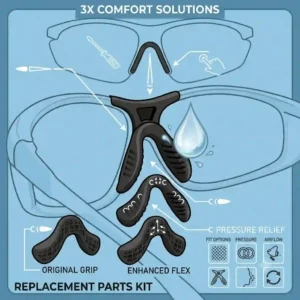
Tired of constantly pushing your slipping frames back up your face and dealing with painful red indentations? Securing the proper bridge support can instantly preserve your optical alignment and maximize your daily comfort without requiring a brand-new pair of expensive glasses.
Practical Usage Guide: Mastering the Maintenance Cycle
Replacing a rubber nose piece isn’t just a matter of ripping the old one off and jamming the new one on. Improper installation can bend the delicate wire cores of your frames or stretch the new material, ruining its gripping capability before you even wear it. Here is the insider’s approach to doing it right.
The 3-Step Perfect Installation
-
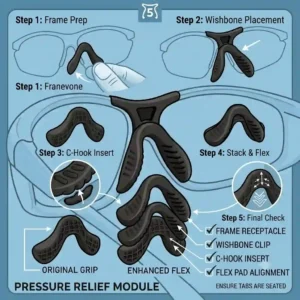
The Warm Water Prep: Never install cold rubber. Soak your new replacement pieces in a bowl of warm (not boiling) water mixed with a single drop of dish soap for 3 minutes. This temporarily expands the material, making it pliable and lubricating the internal channel for a frictionless slide over the frame mounts.
-
The Push, Don’t Pull Technique: When installing, align the internal groove with the frame’s mounting pin. Push from the base of the pad. Never grab the top of the rubber nose piece and pull it over the mount; this stretches the material, causing micro-tears that will eventually split.
-
The Flush & Set: Once seated, rinse the glasses under cold water. This washes away the soapy lubrication and instantly contracts the material, locking it tightly onto the frame chassis.
The Year One Roadmap
What happens to this component after months of daily use?
-
Month 1-3: Peak performance. The material is soft, highly grippy, and forms to your specific facial geometry.
-
Month 6: You’ll notice a slight hardening and perhaps a shiny buildup. This is calcified sweat and sebum.
-
Month 12: Depending on your skin’s acidity and your sunscreen usage, the material may begin to crack or feel “sticky.” This sticky phase means the polymer bonds are breaking down chemically. Once it gets sticky, it cannot be cleaned; it must be replaced.
To extend this lifespan, your daily maintenance routine should never include wiping the pads with your shirt. Instead, rinse them under the tap after a heavy workout to wash away the destructive salt crystals.
Real-World Scenario: The Commuter vs. The Endurance Athlete
It is a common industry misconception that the “best” and most expensive product is the right fit for everyone. Let’s break down two drastically different user profiles to understand why context matters more than specs.
Profile A: The Daily Commuter & Office Worker
-
Environment: Air-conditioned car, office desk, mild outdoor walking.
-
Pain Points: Pressure headaches behind the ears, red marks on the nose bridge after 8 hours of screen time.
-
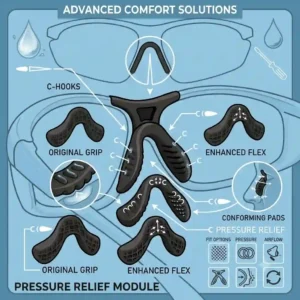
The Right Tool: In this scenario, premium hydrophilic grips like Oakley’s Unobtainium are actually a bad fit. They are too aggressive and firm for static wear. The commuter needs the Seek Optics Universal Silicone Pads. The marshmallow-soft silicone diffuses the weight of heavy acetate frames and blue-light lenses, eliminating those embarrassing red dents on the nose during afternoon meetings.
Profile B: The Ultramarathoner
-
Environment: 90°F heat, 80% humidity, excessive vibration, constant sweat exposure.
-
Pain Points: Glasses sliding down the nose, requiring constant hand-to-face adjustments that break running rhythm; sweat pooling in the lenses.
-
The Right Tool: The runner requires the Smith Optics PivLock Replacement Kit or the Oakley Flak 2.0 Kit. When running a 50K trail race, the continuous micro-impacts of your footfalls will shake loose anything but a high-friction, moisture-activated grip. The slight rigidity of these performance materials ensures the frame stays exactly 12mm away from the eyes, preserving essential airflow and preventing the lenses from fogging.
How to Choose the Right Material: Silicone vs. Hydrophilic Rubber
When you strip away the branding, the performance of your eyewear boils down to organic chemistry. The material you choose dictates the longevity and functionality of the component.
The Chemistry of Silicone
According to general polymer science principles, medical-grade silicone is exceptionally inert. It doesn’t react with the natural oils (sebum) on your face.
-
Pros: Incredible softness, completely hypoallergenic, immune to UV discoloration.
-
Cons: Extremely poor performance when wet. Water acts as a lubricant against silicone, causing immediate slippage.
-
The Verdict: Choose silicone if you are wearing metal wireframes in an office or casual setting.
The Engineering of Hydrophilic Rubber
Hydrophilic translates to “water-loving.” Compounds like Megol or Unobtainium are engineered to absorb microscopic amounts of moisture.
-
Pros: Friction coefficient increases with moisture. Superior shock absorption during high-impact sports.
-
Cons: Highly susceptible to chemical breakdown. DEET, alcohol, and the high acidity of some people’s sweat will cause the rubber to literally melt and become a sticky goo over time.
-
The Verdict: Mandatory for cyclists, runners, and tradesmen working in hot environments.
Common Mistakes When Buying Replacement Parts
Even experienced optical wearers make critical errors when ordering replacement components. Here are the pitfalls to avoid:
-
Ignoring the Mounting Mechanism: Not all pads are created equal. A “push-in” pad will not fit a “screw-in” mount, and a “slide-on” earsock won’t fit a wire-core frame. Always physically inspect your frames—do you see a tiny microscopic screw, or does the pad pop into a metal loop?
-
Falling for “Universal” Claims on Proprietary Frames: If you own high-end wraparound sports frames (like Oakley or Costa), “universal” is a myth. The chassis of these frames use proprietary locking nodes. A generic tube of rubber will slide right off. You must buy model-specific replacements.
-
Buying Based on Color Over Function: Neon green replacement parts look incredibly cool online, but colored rubber often degrades faster than standard black or clear components. The pigments used to color synthetic polymers can weaken the structural integrity of the material when exposed to heavy UV light. Stick to black for maximum lifespan.
Safety, Fit, and Optical Alignment
It’s crucial to understand that a rubber nose piece does more than provide comfort; it is a critical safety and optical component. Organizations like the American Academy of Ophthalmology consistently stress the importance of properly fitted eyewear for adequate UV protection.
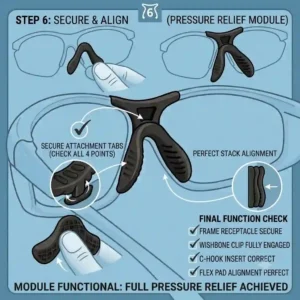
If your nose pads have worn down by just 2 millimeters, the entire frame drops lower on your face. This alters the “pantoscopic tilt”—the angle of the lenses relative to your eyes. For prescription wearers, this slight drop moves your pupils out of the “optical center” of the lens, leading to subtle blurring, eye strain, and severe end-of-day tension headaches.
Furthermore, lowered frames allow direct, unfiltered UV light to bypass the top of the lenses, reflecting off the back of the glass directly into your pupils. By simply replacing a degraded $15 pad, you restore the original factory geometry of the glasses, realigning the optical center and sealing off dangerous light leaks.
Hidden Costs & Total Cost of Ownership
When calculating the total cost of ownership for premium sunglasses, most buyers only look at the initial $150-$300 purchase price. They fail to account for the “maintenance cycle.”
If you are an active user, you should treat a rubber nose piece the same way you treat running shoes or bicycle tires—they are wear-and-tear items with a finite lifespan. Budgeting roughly $20 to $30 a year for fresh rubber components extends the life of a $200 frame indefinitely.
The hidden cost arises when users ignore the sticky, degrading rubber. The acidic breakdown of the polymer can actually eat into the clear coat of the plastic frame underneath it. I’ve seen riders try to glue failing pads back onto their frames with cyanoacrylate (Super Glue). The off-gassing of the glue destroys the polarized film on the lenses, turning a $20 fix into a $200 disaster. Preventative maintenance is drastically cheaper than component failure.
Features That Actually Matter (And Marketing Fluff to Ignore)
In the world of eyewear accessories, marketing departments love to invent complex terminology for simple concepts. Here is how to filter the noise:
-
✅ DO Care About “Dual-Injection Molding”: This is a legitimate manufacturing process where a hard plastic spine is permanently bonded to the soft rubber exterior. It ensures the pad locks rigidly into the frame while feeling soft on your skin.
-
❌ IGNORE “Aerospace-Grade” Claims: Unless you are experiencing zero gravity, this is meaningless jargon meant to justify a markup on standard polyurethane.
-
✅ DO Care About “Asymmetrical Ergonomics”: Our noses are not perfectly flat wedges. Left and right specific pads (asymmetrical) conform to the complex curve of the nasal bone far better than symmetrical teardrops.
-
❌ IGNORE “Thermal-Regulating” Rubber: Your nose pad is too small to regulate your body temperature. If a brand claims their rubber cools your face, they are simply marketing the natural airflow allowed by the frame’s design, not the pad itself.
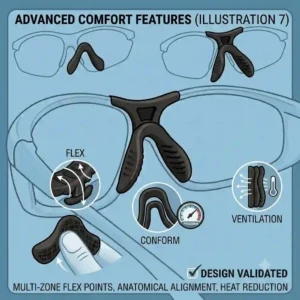
Conclusion
Revitalizing your eyewear doesn’t require a trip to an expensive optometrist or dropping hundreds of dollars on a new set of frames. By identifying your specific use case—whether you need the unshakeable hydrophilic grip of an athletic kit or the pillowy, hypoallergenic comfort of medical-grade silicone—you can fundamentally transform how your glasses feel and perform.
Remember, a failing rubber nose piece does more than just cause annoying slippage. It compromises your optical alignment, induces eye fatigue, and risks UV exposure. Treat these components as the critical ergonomic anchors they are. Stick to proper installation techniques, wash them regularly to stave off chemical breakdown, and replace them the moment they begin to degrade. Your eyes, and your wallet, will thank you.
FAQs
❓ How long does a rubber nose piece typically last?
✅ Depending on your sweat acidity and UV exposure, expect peak performance for 6 to 12 months. Once the material becomes sticky, loses its elasticity, or turns visibly yellow, it’s chemically breaking down and needs immediate replacement…
❓ Can I use superglue to fix a loose rubber nose piece?
✅ Absolutely not. The chemical vapors off-gassing from superglue (cyanoacrylate) will permanently cloud and ruin the polarized or anti-reflective coatings on your lenses. Always use friction-fit replacements designed specifically for your frame model…
❓ Why are my silicone nose pads turning green?
✅ The green tint is not the silicone itself; it is copper oxidation (verdigris) occurring on the metal frame wire inside or behind the pad. This happens when acidic sweat reacts with the metal alloy over time…
❓ Are push-in and screw-in nose pads interchangeable?
✅ No. A push-in mount relies on a friction-fit rectangular or round nub, while a screw-in mount requires a microscopic threaded screw to hold a delicate metal loop. You must match the exact mounting hardware of your frames…
❓ How do I stop my rubber nose piece from causing acne?
✅ Wash your glasses daily with mild dish soap and lukewarm water. Pores get clogged by the buildup of sebum, dead skin cells, and dried sunscreen trapped in the microscopic pores of the hydrophilic rubber. Daily cleaning prevents this…
Recommended for You
- 5 Best glasses ear piece replacement Fixes for 2026: Expert Guide
- 5 Best eyeglass stick on nose pads for 2026 (Expert Tested)
- 5 Best eyeglass nose bridge pads of 2026: Expert Testing & Reviews
Disclaimer: This article contains affiliate links. As an Amazon Associate, I earn from qualifying purchases. If you purchase products through these links, we may earn a small commission at no additional cost to you.
✨ Found this guide helpful? Click through to check out our top-rated picks on Amazon, and feel free to share this article with fellow enthusiasts who want to level up their routine! 💬🤗
[addtoany]
